Categoria: Miscellanea

  • My Path Through EU Projects: From Research to Real-World Impact

    My Path Through EU Projects: From Research to Real-World Impact

    Over the past few years, I’ve had the opportunity to work at the intersection of research, communication, and strategic project development within the framework of European-funded programmes. From managing dissemination strategies to shaping exploitation pathways and translating complex scientific results into accessible narratives, my work has centered on one key goal: making research matter, beyond deadlines, and into the world.

    As Communication, Dissemination & Exploitation Manager for several Horizon Europe and H2020 projects, I’ve had the chance to build impactful narratives around innovation, while ensuring alignment with funder expectations, stakeholder needs, and measurable outcomes. These projects have involved close collaboration with scientific partners, policy institutions, and private-sector stakeholders across Europe.

    What I bring to the table

    • Experience managing CDE work packages for EU projects, from concept to final review.
    • A background in research, with a PhD in Social and Human Sciences, and the ability to engage both scientific and non-specialist audiences.
    • Strong writing and editorial skills, from policy briefs and reports to branding assets and stakeholder content.
    • Ability to translate and summarise knowledge to different contexts, including video production and social media content.
    • Proven success organizing training, webinars, and public-facing events aligned with impact goals.
    • Multilingual communication (Italian, English, Spanish), with a deep cultural understanding of European research landscapes.
    One of the videos I produced!

    Looking Ahead

    As EU projects evolve and demand greater visibility, stakeholder engagement, and long-term sustainability, I see a growing need for integrated communication roles within technical teams, not just to fulfill formal obligations, but to unlock the true value of the work being done.

    I’m willing to expand my collaborations where I can contribute my experience to innovative research environments that want to elevate their communication and impact. If your team is working on something that needs clear messaging, thoughtful dissemination, or strategic exploitation planning, I’d love to talk!

    Let’s make research visible, valuable, and actionable.

  • Presentación “De Roma a Almería con Elsa Morante”

    Presentación “De Roma a Almería con Elsa Morante”

    El sábado 13 de abril 2024, a las 13 horas, presentaré Elsa Morante y sus novelas en la librería “El faro de Recóndito” en Almería.

    En esta presentación, hablaré de Elsa Morante, de sus novelas, y sobre todo de su viaje a Almería.

    Os espero!

  • I libri che ho letto nel 2023

    In questo post raccolgo i libri che ho letto nel 2023, in ordine temporale. Non c’è una logica nella scelta dei libri. Spesso e volentieri sono libri che volevo leggere da tempo, o che ho riletto, o che mi hanno attirato l’attenzione per un qualsiasi particolare. In totale sono 25, in italiano, inglese e spagnolo. Qual è il mio preferito e quale consiglierei? Scoprilo!

    Jerry Spinelli, Stargirl

    Un regalo di una grande amica, è la dimostrazione che i libri per giovanotti sono adatti anche ai più grandi. Jerry conosce Stargirl, una ragazza unica che non vuole essere una fra tanti. Anche se sembra accettare le conseguenze di essere sempre fuori dal coro, Stargirl in realtà soffre. Jerry si troverà a pensare riflettere su come essere unici in un mondo che ci vuole tutti uguali.

    https://www.amazon.it/Stargirl-Jerry-Spinelli/dp/8804756012/ref=sr_1_1?__mk_it_IT=%C3%85M%C3%85%C5%BD%C3%95%C3%91&crid=3HC0Y2UIT5SLQ&dib=eyJ2IjoiMSJ9.jBJPlKWXi65owJxQJtaULlYldYQrDlDsaQfAunFNqL5zK3by5CHSMmIG5X080BUSVWzDvmJRIfG8mlekCy8L7PUZIPKMrY8sQcoSLiiSB_ww6Hf_nctlL5UgaBCU9Un1B-LTUAQZvqCqCWPt3sEB38wMHN5_bJnj14ppb7Pw_RaMtdeBiw3cVT0ioBquxo9OhGPtnQWRWMOLWOCd0lhsAF2rKzqsGvqhILQZacH7D4u6YmV7W8WDD4IU7gQPeMXfoS95ncpjJbTeG5VO75rYbseXX3KgcEgnR8ZorjmlDJo.sItiyW4pHBbSbhYOohr8aUJrjfyaGabNptb7QFs_d74&dib_tag=se&keywords=jerry+spinelli+stargirl&qid=1709309028&sprefix=jerry+spinelli+stargirl%2Caps%2C99&sr=8-1

    Il Post/Iperborea, Cose spiegate bene. E giustizia per tutti

    Ossessionata dal true crime, ero incuriosita da questa rivista pubblicata da Il Post. Non mi ha delusa: il sistema giudizia è davvero spiegato bene, raccontando cosa succede quando avviene un crimine e spiegandolo sia dal punto di vista degli indagati che delle vittime.

    Ernest Hemingway, The Old Man and the Sea

    In libreria da molto tempo e con una curiosità rinnovata dalla vicinanza al mondo della vela e della pesca, l’ho preso in mano. Per me è stata un po’ una delusione: non sono riuscita a trovare la profondità nelle descrizioni delle uscite di pesca. Gli darò una seconda possibilità?

    Juan Gómez Jurado, Reina Roja

    Primo di una trilogia, Reina roja ha come protagonista Antonia Scott, una detective sui generis. Questo giallo/thriller/noir merita la trasposizione in serie appena uscita su Prime Video.

    Javier Marías, Berta Isla

    Uno dei miei romanzi preferiti dell’anno. Javier Marías è uno degli scrittori più importanti della scena contemporanea spagnol e questo libro è sicuramente uno dei suoi migliori e mi è stato consigliato da un grande amico. Berta Isla sposa Tomás, amico della gioventù, e pensa di sapere tutto di lui. Ma le sue assenze e i misteri che avvolgono la figura del marito logoreranno la relazione, ma fino a che punto? Ho in sospeso la lettura di Tomás Nevinson, la stessa storia raccontata dal punto di vista opposto.

    Andrea Camilleri, La luna di carta

    Pier Paolo Pasolini, Las bellas banderas

    Gianrico Carofiglio, Passeggeri notturni

    Melania G. Mazzucco, Vita

    Juan Manuel Gil, La flor del rayo

    Alba de Céspedes, Dalla parte di lei

    Lucía González Mendiondo, El género y los sexos

    Miguel Naveros, El malduque de la luna

    Stefano Nazzi, Il volto del male

    Haruki Murakami, Norwegian wood

    Ilaria Gaspari, Vita segreta delle emozioni

    Arto Paasilinna, Piccoli suicidi tra amici

    Alessandro Maestri, Mi chiamavano Maesutori

    The passenger (Il Post/Iperborea), Napoli

    Magda Szabo, La porta

    Layla Martínez, Carcóma

    Vera Gheno, Le ragioni del dubbio

    Sarah Penner, Il segreto della speziale

    Jane Austen, Emma

    Bella Mackey, How to kill you family

  • La obra de Elsa Morante en España

    La obra de Elsa Morante en España

    Hace algunos años -parece hace una vida, pero es solo hace 6 años- empecé una aventura que no sabía adonde iba a llevarme.

    Esa aventura fue empezar un doctorado en teoría de la literatura.

    Los resultados de años de lecturas e investigación se pueden descargar en la web del Ministerio de Educación.

  • Casatiello – La nostra ricetta

    Casatiello – La nostra ricetta

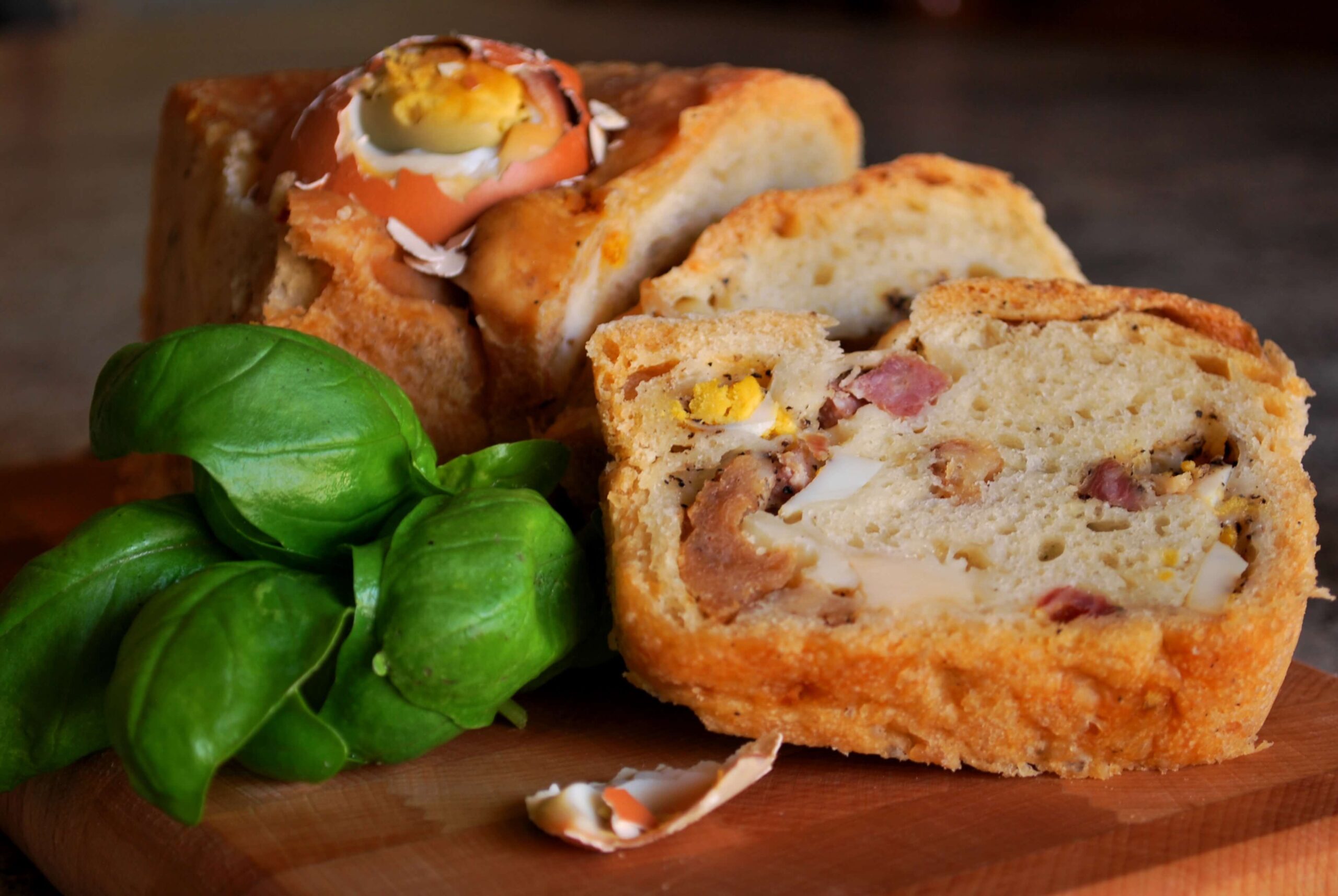
    Tempo di Pasqua. Chi ha origini napoletane sa che la Pasqua è sinonimo di due cose (principalmente): la pastiera e il casatiello.

    Le origini di questa torta salata pasquale non si conoscono, ma sono sicuramente umili. La base è l’impasto della pizza, lasciato riposare per poco, e poi fatto lievitare per diverse ore dopo l’aggiunta degli ingredienti.

    Ogni famiglia ha la sua ricetta e oggi vi presento quella della nostra famiglia.

    • 600 gr di farina
    • 350 ml di acqua (più o meno)
    • 1 cubetto di lievito di birra fresco
    • 1 cucchiaino di sale
    • 1 cucchiaio di olio
    • Strutto
    • Pepe
    • Da tagliare a cubetti: salame, pancetta, coppa, ciccioli e qualsiasi affettato stagionato che si possa tagliare a cubetti per un totale di circa 1kg
    • Pecorino o parmigiano grattugiato
    • Uova

    Si parte dalla base, ovvero un normale impasto per la pizza. Mescola un po’ di acqua a temperatura ambiente o leggermente riscaldata (una tazza) con il cubetto di lievito, poi mescola con la farina e comincia a impastare. Quando hai una pastella, aggiungi olio e sale e comincia a aggiustare le quantità di farina e acqua per avere un impasto che sia elastico e non appiccicoso. Lascia riposare e lievitare per almeno un’ora.

    A parte comincia a tagliuzzare tutti gli affettati e i formaggi. Quando l’impasto è cresciuto, stendilo e comincia a spalmare lo strutto in quantità e distribuisci i cubetti di affettato, il formaggio e il pepe. Per amalgamare il tutto attorciglia l’impasto su se stesso e continuando ad aggiungere strutto al bisogno. Più strutto e più ingredienti ci sono, meglio è 😊

    Aggiungi poi le uova crude dopo aver posizionato il casatiello nella teglia (generalmente una rotonda e alta o quella da ciambella con il buco in mezzo). Lascia riposare per almeno 5 ore. Questo passaggio dipende dalle condizioni esterne: se il casatiello si fa in inverno, si può lasciare riposare anche tutta la notte; in primavera possono bastare 5/6 ore. Quando è lievitato di nuovo, infornare a circa 180 gradi fino a che il casatiello non è ben dorato (di solito richiede almeno 45 minuti di cottura).

    Buon appetito!!

  • La obra de Elsa Morante en la prensa española

    La obra de Elsa Morante en la prensa española

    Acaba de publicarse un artículo que es extraído de la tesis doctoral que estoy a punto de terminar, La obra de Elsa Morante en España.

    En el artículo publicado por la revista de la Universidad de León Estudios humanísticos. Filología presento un análisis de las ocurrencias del nombre de Elsa Morante en algunos periódicos españoles.

    El artículo se puede descargar aquí.

  • Coprifuoco: etimologia comparata

    Coprifuoco: etimologia comparata

    In questo anno delicato in cui le nostre vite sono cambiate profondamente, anche la lingua ha subito dei cambiamenti. Ci siamo abituati a termini stranieri riadattati (o meno) al nostro idioma.
    Non abbiamo paura di usare parole come lockdown, smart-working, e-learning, drive-in e drive-through, solo per citarne alcune. Altre soffrono un mutamento semantico: ricevere un messaggio come “Sono positivo” adesso ci fa paura, mentre fino a qualche mese fa dava un messaggio di speranza. Questi cambiamenti sono normali nelle lingue, dato che esse sono lo strumento che gli esseri umani usano per esprimersi. Lo racconta Vera Gheno, sociolinguista, in un’intervista per Wired:


    Tra lingua e società esiste sicuramente uno stretto rapporto, che si muove, però, in entrambe le direzioni. Da una parte, la lingua registra ogni cambiamento sociale e ne conserva traccia: quando ci troviamo di fronte a un concetto nuovo, abbiamo bisogno che la nostra lingua si modifichi per poterlo esprimere e quindi nascono parole nuove; oppure accade che parole che prima avevano un significato lo cambino e lo adattino a nuovi contesti (è il fenomeno che in linguistica si chiama slittamento semantico, o risemantizzazione funzionale). Ma accade anche che sia la lingua a influenzare il nostro modo di percepire la realtà, mettendone a fuoco alcuni aspetti che, senza una parola o un’espressione di riferimento, resterebbero sullo sfondo e sarebbero meno percepibili. Questo scambio bidirezionale tra lingua e società avviene di continuo ed è il segno di una lingua efficace e vitale, che riesce ad adattarsi alla realtà e a rispecchiarla.

    Vera Gheno, sociolinguista

    Il campo lessicale della guerra, soprattutto nel primo momento della pandemia, ci è servito per descrivere il tragico momento che iniziavamo a vivere. Medici e infermieri in trincea, in prima linea erano prima pronti a combattere, mentre ora sono stremati dalla battaglia.

    Nelle ultime settimane è saltato alla cronaca l’uso della parola coprifuoco: linguisticamente, in italiano è una parola composta dal verbo “coprire” e dall’oggetto “fuoco”: rende bene l’idea di spegnere delle fiamme, evidentemente per evitare mali peggiori. Ci basta consultare il vocabolario Treccani per scoprire la storia del termine:

    Usanza medievale per cui, a una determinata ora della sera, gli abitanti di una città erano tenuti a coprire il fuoco con la cenere per evitare incendi; anche il segnale (suono di campane o altro) con cui s’intimava il coprifuoco

    Treccani.it

    Il fuoco, di solito portatore di vita, nelle città medievali era spesso legato alla distruzione, così come il suono delle campane spesso avvisava dei possibili saccheggi.

    Il dizionario Treccani ci presenta anche la possibile etimologia della parola, che pare non essere direttamente italiana, ma derivata dal francese coverfeu. Il termine italiano sarebbe così un prestito linguistico adattato alla lingua italiana traducendo i due termini che costituiscono l’espressione. Un’altra lingua che ha adottato il termine francese, questa volta adattando la parola alla pronuncia, è l’inglese: da coverfeu a curfew, come spiega il dizionario Merriam-Webster.

    È interessante notare che in non tutte le lingue europee sia presente l’idea di coprire il fuoco per evitare gli incendi. In spagnolo il termine è toque de queda, simile al portoghese toque de recolher, ed entrambi richiamano il lessico militare. Il “toque” a cui si fa riferimento è il suono di una sirena o di una campana che, in circostanze straordinarie, segnalava alla popolazione l’obbligo di rimanere a casa, in spagnolo “quedarse”, o di fare ritorno alle abitazioni, come può ricordare il “recolher” portoghese.

    In euskera possiamo trovare tre espressioni: etxeratze-agindu (“etxe”, casa, “ra”, verso, “tze”, per, “agindu”, ordine: ordine per tornare a casa), kera-dei (“kera”, conclusione, “dei”, richiamo: richiamo alla conclusione) e isildei (“isil”, silenzio, “dei”, richiamo: richiamo al silenzio). Tutte e tre ci ricordano il richiamo militare o l’obbligo di cessare le attività.

    In tedesco, coprifuoco si può tradurre con ausgangssperre, letteralmente “barriera all’uscita” o ausgehverbot, divieto di uscire. In sloveno il termine è policijska ura, mentre in polacco è godzina policyjna. In entrambi i casi, il riferimento all’”ora della polizia” fa venire la pelle d’oca e ci ricorda il passato difficile dei paesi dell’Est Europa.

    Potremmo andare avanti per ore parlando dell’etimologia della parola “coprifuoco” nelle diverse lingue: possiamo però trovare dei punti in comune. La maggior parte delle lingue rimanda a un lessico puramente militare, legato all’obbligo di rimanere in casa, mentre in quelle che hanno adottato il termine dal francese rimane il significato di misura preventiva per evitare mali maggiori.

    In ogni caso, è sempre una misura obbligata in un momento di emergenza: non ci deve sorprendere l’ostilità che questo termine suscita in tutto il mondo perché risveglia, anche incoscientemente, ricordi della nostra memoria collettiva.

  • Alasdair Gray – Lanark

    Alasdair Gray – Lanark

    The following article is a short essay and review realised as part of a take-home exam for Postromantic Materialism course held at the University of Leuven in 2014-2015. You can also read an essay about To the Lighthouse by Virginia Woolf, NW by Zadie Smith, The Art of Fielding by Chad Harbach , The Inheritance of Loss by Kiran Desai, The Heat of the Day by Elizabeth Bowen and A Handful of Dust by Evelyn Waugh.

    The novel tries out a blend of realism and fantasy. Read up on the genre of fantasy and comment on specific occurrences of the fantastic (e.g. the phenomenon of dragonhide).

    In general, when we think about the genre of fantasy we imagine supernatural forces, unreal worlds, invented creatures. The notion of “fantastic” in a more realistic application to the literature was presented for the first time by the structuralist critic Tzvetan Todorov in his book  The Fantastic: A Structural Approach to a Literary Genre (1973). To summarize his idea, a novel is fantastic whenever it creates an hesitation of characters and, above all, readers when it raises questions about reality. The hesitation of the reader is the first condition of fantastic; the second is the hesitation of a character and the third condition is that the reading of the text should not be poetic or allegoric. One example of this incredulity coming from the hesitation of the reader can be found in the spanish novel El cuarto de atrás by Carmen Martín Gaite, reminding the reader The Metamorphosis by Franz Kafka. In Kafka’s novel, the protagonist Gregor Samsa wakes up being a monstrous creature, while in Martín Gaite’s short story is all built around the female protagonist, a man dressed in black and a beetle which appears in her apartment when the man is not there.

    Lanark by Alasdair Gray seems to enter in this series of fantasy book with a realistic approach of the writer. Realism and fantasy coexist in this novel, structured in a way to confuse the reader, starting with “Book three” and followed by a “Prologue”.

    “If reality is constructed verbally, through a text, Scottish texts are often seen as hybrids, a mixing and matching of different traditions and genres, fact and fiction, Gothic fantasy and social history, romance and realism. Bernstein notes how this mixing of genres is not only a characteristic of Scottish fiction but a central concern in Gray’s work: “It should thus come as no surprise to find frequent mixing of genres in Gray’s writing, and though full-blown fantasy will not always be part of the aggregate, some blending… appears inevitable”. (Kacvinsky:791)

    From the first pages of the book the reader understands that the novel will not be easy to interpret. The references to an unnatural presence in the setting of the novel are inserted soon after the presentation of the protagonist and continue throughout the novel as infectious illnesses:

    I asked what the hard patch was. He said, “We call it dragon-hide, a name more picturesque than scientific, perhaps, but the science of these things is in its infancy. You can dress now.” (Gray:23-24)

    The fantastic element is always presented in a self-coherent setting, as in page 36: ““You’ve got dragonhide! Your shoulderblades are covered!” “Does that excite you?” “I have it too!”” (Gray:36). In this dialogue , Rima and Lanark could exchange the word “dragonhide” with “tatoo”, for instance, and everything will continue to seem natural and realistic. Another representation of the fantastic is in the “Prologue”, from page 108 to 117. The fluidity of the episode between Rima, Lanark and the Oracle is complicated by the continuous shift between the narrating person. Also the hallucinations do not help in understanding who is thinking what: “All the time they saw through the window people moving in the rooms and streets of a city, though sometimes there were glimpses of mountains and sea, and at last huge waves moving slowly at the foot of a cliff” (Gray, 1981:111).

    As perfectly pointed out in Lousbergh’s work,

    “As for the themes fantasy introduces, Lanark features many, such as transformations and dualism and the motifs of the ghost, the double, enclosures, cannibalism and hallucination. […] The one thing they all have in common, is obviously the fact that they enhance doubt and hesitation thematically. Many of the interpretative questions Lanark does not answer relate to exactly these themes and motifs, for instance: Is Lanark the afterlife ghost of Thaw and/or is he Thaw’s double or other self? Does Thaw kill marjory, or it is merely an hallucination? All motifs question the trueness of the truth and make both reader and character doubt reality. Even Lanark himself asks the Oracle if Thaw really killed Marjory or hallucinated it […] Fantasy than holds up the question of what is real and what not and does not answer it”. (Lousbergh, 2003:73)

    It is easy to recognize the idea of fantasy in the chapters where Lanark is protagonist. At the Institute, for instance, the absurdity of some scenes -like the explosions of patients or the cure given by doctors- immediately lead the reader to an imaginary setting or even a dream. But also in Thaw sections, the more realistic ones, we can see some issues of the fantastic genre, closer to the idea of hesitation explained by Todorov. “thaw struggles with perspectives” (2003:77) and so we can say that “realism is thus overpowered by fantasy” (2003:77)

                While reading Lanark we can be sure of only one thing: there is no real reality, as well as there is no fantastic fantasy. The structure of the novel, the uncertainty of time, the balance between a realistic world and an imaginary town like Unthank -though really close to the representation of Glasgow- keep the reader in a state of uncertainty which is soon reflected in the own life of the reader. Is it possible to conceive fantasy present in reality only in real life?

    “Like so much modernist fiction, Lanark in this way continues to demonstrate that the temporal systems which constrain and commodify twentieth-century experience can still be escaped or reordered in art, imagination, and narrative, if hardly any longer in fact. Lanark is by no means alone among postmodernist novels in following on from modernism in this way”. (Stevenson:133)

    Bibliography

    Alasdar Gray, Lanark, 1981. PDF version.

    Donald P. Kaczvinsky, “Making up for Lost Time”: Scotland, Stories, and the Self in Alasdair Gray’s “Poor Things” in Contemporary Literature, Vol. 42, No. 4 (Winter, 2001), pp. 775-799, University of Wisconsin Press

    Randall Stevenson, “Greenwich Meanings: Clocks and Things in Modernist and Postmodernist Fiction” in The Yearbook of English Studies, Vol. 30, Time and Narrative (2000), pp. 124-136, Modern Humanities Research Association

    Goedele Lousbergh, Who’s fooling who? Power, authority and how to undermine them in Alasdair Grays’ Lanark: a life in four books, KUL. Faculteit letteren. Departement literatuurwetenschap. Engelse literatuur, 2003


  • Evelyn Waugh – A Handful of Dust

    Evelyn Waugh – A Handful of Dust

    The following article is a short essay and review realised as part of a take-home exam for Postromantic Materialism course held at the University of Leuven in 2014-2015. You can also read an essay about To the Lighthouse by Virginia Woolf, NW by Zadie Smith, The Art of Fielding by Chad Harbach , The Inheritance of Loss by Kiran Desai and The Heat of the Day by Elizabeth Bowen.

    Waugh borrows his title from T.S. Eliot’s “The Waste Land,” one of the foundational texts of (English) Modernism. Investigate the notion of Modernism and discuss its relevance to Waugh’s work.

    Starting from the incipit of the novel, Waugh declares his idea of writing something as much closer as possible to the real human nature. He quotes line 27-30 of the first part of The Waste Land, titled the Burial of the Dead. It is a clear reference to the plot of the novel: the story focuses on a couple, Tony and Brenda Last. After their son’s death in a car accident everything changes. Brenda demands the divorce and Tony leaves for an expedition to Brazil where, after being rescued by Mr. Todd, is forced to read aloud Dickens’ novels to him. Tony is declared dead and Brenda marries an old friend. This very brief summary can’t provide an overview of the several themes in the writing. “The Modernist impulse is fueled in various literatures by industrialization and urbanization and by the search for an authentic response to a much-changed world” (see Encyclopedia Britannica Online). Critics tend to divide the modernism into two periods: the pre-modernism, with Joseph Conrad’s Hearth of Darkness novel as milestone, and postwar modernism taking as a major example the Eliot’s long poem The Waste Land. It is not a coincidence that these two major works come together in Waugh’s novel. It could be related with the idea of defining in literature how a deeply changed world influenced the lives of normal people. Modernism is often related with the historical period between the two world wars, when disillusion and fragmentation broke the reception of a novel as an entertaining piece of art. In modernism perspective, modeling and the subject matter more than the general plot or idea of a novel.

    Morality also plays a big role in modernism and it is a highly deepened topic in Waugh’s novel, lying into the opposition between the modernism -represented by The Waste Land and Heart of Darkness– and the artificial and sentimental view of the society.

    Bibliography

    S. Eliot, The Waste Land, 1922. Consulted online on Project Gutenberg’s website http://www.gutenberg.org/files/1321/1321-h/1321-h.htm, 25th October 2014

    Encyclopaedia Britannica Online, Modernism (art), http://www.britannica.com/EBchecked/topic/387266/Modernism, 25th October 2014

    http://www.connotations.uni-tuebingen.de/lobb01312.htm
    http://www.connotations.uni-tuebingen.de/stannard01413.htm

  • Virginia Woolf – To the lighthouse

    Virginia Woolf – To the lighthouse

    The following article is a short essay and review realised as part of a take-home exam for Postromantic Materialism course held at the University of Leuven in 2014-2015. You can also read an essay about NW by Zadie Smith, The Art of Fielding by Chad Harbach , The Inheritance of Loss by Kiran Desai and The Heat of the Day by Elizabeth Bowen.


    The focus on Lily Briscoe makes To the Lighthouse an instance of the so-called Künstlerroman. Read up on this genre and select and comment on relevant passages from the text.

    The idea of künstlerroman, the German expression for “artist’s novel”, proceeds from the more general bildungsroman, or “apprenticeship novel”. The künstlerroman focuses on “the development of an individual who becomes—or is on the threshold of becoming—a painter, musician, or poet” (see Encyclopædia Britannica Online). Tipically, the künstlerroman is related to the first author’s steps into the literature and to his literary autobiography. The difference between the bildungsroman and the künstlerroman also lies in the destiny the author imagines for his character. While the hero of the apprenticeship novel “often dreams of becoming a great artist but settles for being a mere useful citizen, the Künstlerroman usually ends on a note of arrogant rejection of the commonplace life” (see Encyclopædia Britannica Online). The most significant example is Joyce’s A Portrait of an Artist as a Young Man (1916), also because the aim of writing a künstlerroman is already explicit in the title of the novel.

    The artist, like the God of creation, remains within or behind or beyond or above his handiwork, invisible, refined out of existence, indifferent, paring his fingernails


    Joyce, 1916, The Portrait of an Artist as a Young man,ch. 5

    Other examples of künstlerroman can be Gabriele d’Annunzio’s Il piacere (1888), Marcel Proust’s À la recherche du temps perdu (1913), John Fante’s Ask the dust (1939) -just to allude to some other acclaimed novels from different countries.

    As regards Virginia Woolf’s oeuvre, To the Lighthouse is not her only exemplification of bildungsroman or künstlerroman. The voyage out (1915) is the first Woolf’s novel and is considered her first example of künstlerroman,since it outlines the life of Rachel Vinrace, a musician who travels to South America and there finds her love, an aspiring writer. Orlando: a biography (1928) is another instance of künstlerroman: the protagonist is young noble and aspiring poet of the Elizabethan period. Some authors see Orlando more as a “satirical künstlerroman, exploring the gender politics of poetics and subjectivity across the ages” (Goldman, 2002:319).

    To the Lighthouse (1927) is “a self-reflexive, feminist künstlerroman” (Goldman, 2002:318). “To the Lighthouse is a novel about memory and desire” (Raitt, 1990:23). A lot has been said about this highly poetical and autobiographical novel by Virginia Woolf. Lily Briscoe is a young woman, a painter, struggling in a post-victorian society for her identification as an independent woman. She is invited to spend some time with the Ramsay’s family in their summer home on the Isle of Skye, in the Hebrides, together with other family friends. She stays at a window, trying to complete her painting of Mrs. Ramsay and her son James, but throughout the first chapter she seems unable to focus on her work. “It was in that moment’s flight between the picture and her canvas that the demons set on her who often brought her to the verge of tears and made this passage from conception to work as dreadful as any down a dark passage for a child” (Woolf, 1927: The Window, 4). For Lily Briscoe the drawing is not a mere portrait, but the representation of a constant conflict between herself and the contemporary society, represented by Charles Tansley, a family friend: “Charles Tansley used to say that, she remembered, women can’t paint, can’t write” (Woolf, 1927: The Lighthouse, 4). This feeling of not belonging to the right situation prevent her not only from working at the canvas, but also to express her real emotions to Mrs. Ramsay: “and it was then too, in that chill and windy way, as she began to paint, that there forced themselves upon her other things, her own inadequacy, her insignificance” (1927: The window, 4).

    To the Lighthouse,an autobiography

    It is easy to recognize To the Lighthouse as an autobiography. Lily Briscoe succeeds in completing the portrait ten years later, after the First World War and the death of Mrs. Ramsay and of her sons Prue and Andrew. Virginia Woolf accomplishes to recreate her complex family situation almost thirty years after her parents’ passing away. For her, “the ‘syllabing’ of To the Lighthouse was a process of involuntary recall as well as of literary creation, and was therefore doubly unexpected for Woolf” (Raitt, 1990:34). In her diary, Virginia Woolf wrote “I used to think of him & my mother daily; but writing The Lighthouse, laid them in my mind”(Bell, 1977:III, 28 November 1928, 208). The writing of To the Lighthouse and the conclusion of the painting are the final expression of artistic success. Virginia Woolf and her alter-ego Lily always wanted to deeply go through their suffering as women before as artists.

    The “H” structure of the novel reminds to this idea of going through a journey to survive the internal struggles of oneself. The first part of the novel, The window, can be seen as the acknowledgement and the subsequent reflection about the obstacles that don’t allow to complete a piece of art, for Lily, or to easily live a normal life after facing parents’ death, for Woolf. The second part, Time passes, is the bridge of the “H” and the shortest chapter of the novel. The thinking shifts to the ineludible passing of the time which cannot help to solve any inner conflict. “But what after all is one night? A short space, especially when the darkness dims so soon, and so soon a bird sings, a cock crows, or a faint green quickens, like a turning leaf, in the hollow of the wave. Night, however, succeeds to night” (Woolf, 1927: Time passes, 3). Part three, The Lighthouse, is the depiction of a new state of the mind, finally free from the sorrows of too much years spent in the shadows of thinking not to be in the right place. “Lily squeezed her tubes again. She attacked that problem of the hedge. It was strange how clearly she saw her, stepping with her usual quickness across fields among whose folds, purplish and soft, among whose flowers, hyacinth or lilies, she vanished” (Woolf, 1927: The Lighthouse, 8). This quote evokes the words of Woolf’s diary about her mother and father, gently faded out of her constant but distressing thoughts.

    “With a sudden intensity, as if she saw it clear for a second, she drew a line there, in the centre. It was done; it was finished. Yes, she thought, laying down her brush in extreme fatigue, I have had my vision” (Woolf, 1927: The Lighthouse, 14). The painting is finally finished, the most confidential and painful novel has come to its final dot. Both Lily Briscoe and Virginia Woolf have concluded their masterpieces.

    Bibliography

    Encyclopædia Britannica Online, s. v. “Kunstlerroman”, accessed 15th October 2014.

    Document URL http://www.britannica.com/EBchecked/topic/325047/Kunstlerroman

    Goldman, Jane. “Woolf, Virginia (1882-1941).” British Writers: Retrospective Supplement

    1. Ed. Jay Parini. Detroit: Charles Scribner’s Sons, 2002. 305-323. Accessed on 17th Oct. 2014.

    Joyce, J., A Portrait of an Artist as a Young Man, 1916. Epub version by Project Gutenberg,

    accessed 15th October 2014. Document URL http://www.gutenberg.org/files/4217/4217-h/4217-h.htm

    Olivier Bell, A., The Diary of Virginia Woolf, Hogarth, London, 1977-84

    Raitt, S., Virginia Woolf’s To the Lighthouse, Harvester Wheatsheaf, 1990.

    Woolf, V., To the Lighthouse, 1927. Epub version by Project Gutenberg,

    accessed 7th October 2014. Document URL http://gutenberg.net.au/ebooks01/0100101.txt